How Long Before You Can Drive on a Coated Garage Floor?
How Long Before You Can Drive on a Coated Garage Floor?
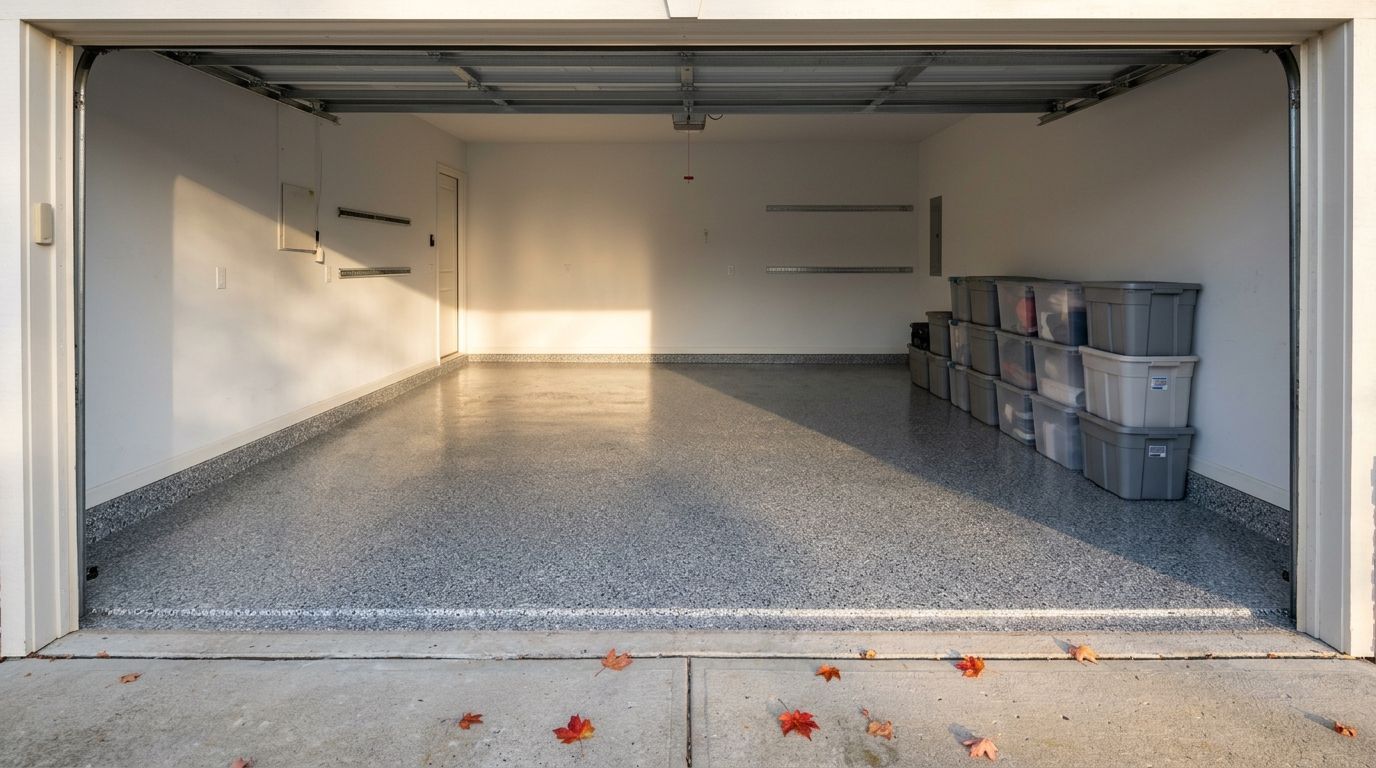
It's usually the second question we get after "how much?" Most people can live without their garage for a day. Four or five days with the car on the driveway in a Waterloo November is a different story. The honest answer depends on which coating goes down, how cold it is, and what you plan to do on the floor first. Here's the real timeline, stage by stage.
The Short Answer
For a typical two-car residential garage with a professional install, here's roughly what to expect. These are normal-conditions numbers. Cold slabs stretch every one of them.
| Stage | Polyaspartic system | Epoxy system |
|---|---|---|
| Walk on it (socks or clean shoes) | A few hours after the topcoat | 12 to 24 hours |
| Light use, move shelving and bins back | Same evening or next morning | About 2 days |
| Park your car | About 24 hours | 3 to 4 days, sometimes longer |
| Full cure (chemicals, heavy loads, hot tires) | About a week | About a week, longer in cold |
How Long Before You Can Drive on a Polyaspartic Floor?
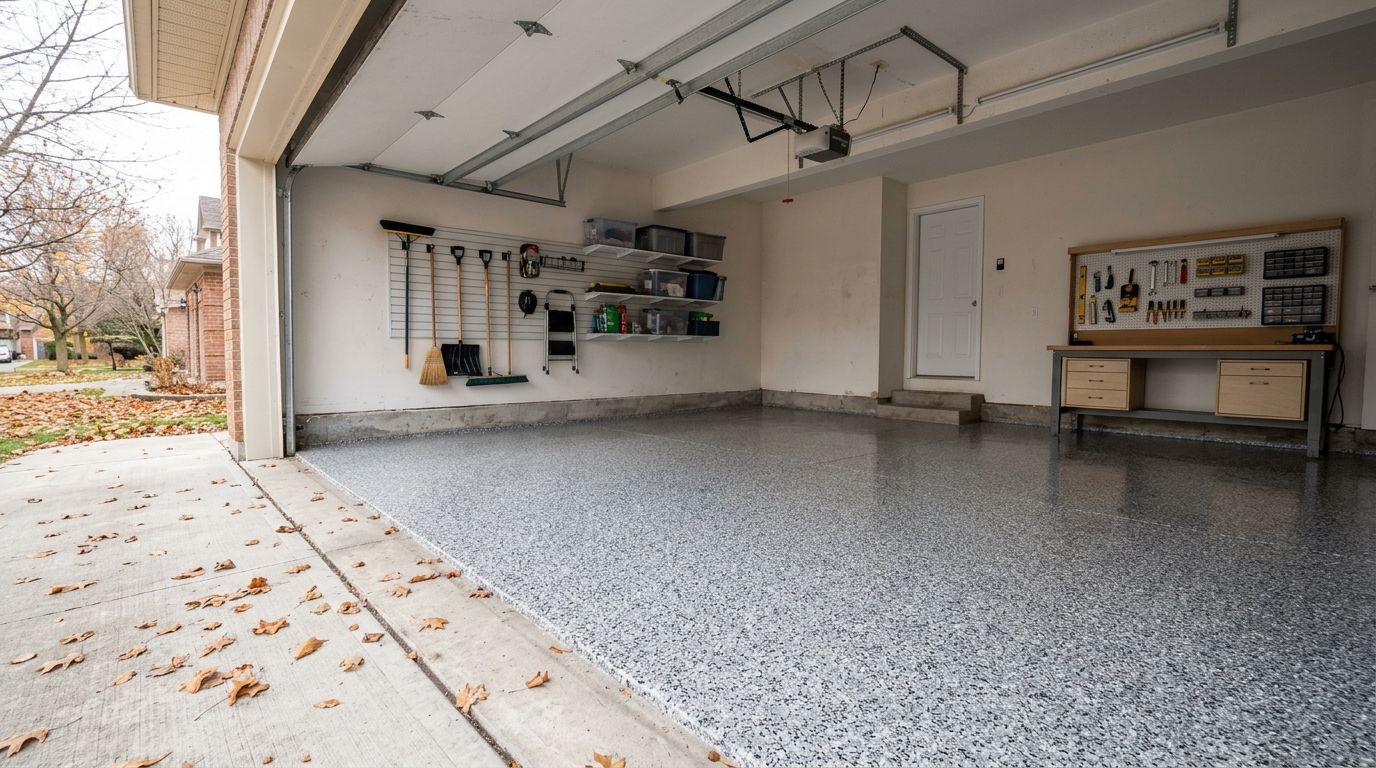
About a day. Polyaspartic cures through a fast chemical reaction, so the floor is hard enough to walk on within hours and ready for a parked car around the 24-hour mark. That's the whole idea behind polyaspartic garage floor coatings: the job is done in a day, and you're back in your garage the next.
If you're not sure what polyaspartic flooring actually is, the short version is that it's a modified polyurea built to cure fast without being too fast to roll out by hand.
Why Epoxy Takes Longer
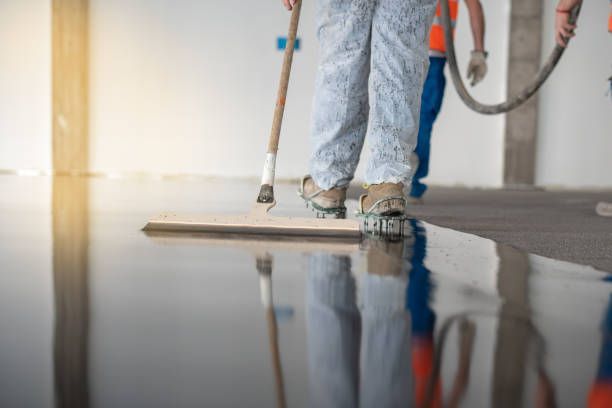
Epoxy cures through a slower reaction between its resin and hardener. The surface can feel dry long before the coating underneath is strong enough to take a 1,800 kg vehicle turning its wheels on it. That gap is where most of the damage on new floors happens: someone sees a dry surface on day two, pulls the car in, and the tires leave marks or lift the coating.
Most epoxy dry time guidance lands around three to four days before parking, and that's in a warm garage. It isn't a reason to rule out a garage epoxy floor. It just means planning for a longer stretch without your garage, and being patient even when the floor looks ready.
What "Cured" Actually Means
Installers use "dry" and "cured" loosely, which causes a lot of confusion. There are really four stages:
· Dry to the touch. The surface won't feel tacky. It's still soft underneath and marks easily.
· Walk-on ready. It will take foot traffic but not dragging, rolling toolboxes, or furniture legs.
· Drive-on ready. It will hold a parked car's weight without tire marks or lifting.
· Full cure. The chemical reaction is essentially finished and the coating reaches full hardness and chemical resistance. On most systems that takes about a week.
The gap between drive-on and full cure is why the first week deserves a little care, even on a floor you're already parking on.
What Slows a Cure Down
Cold. Every coating cures slower in the cold, and a garage slab in late fall can sit several degrees colder than the air. Polyaspartic still cures below freezing, which makes it a genuine cold-weather garage floor coating, but expect the timeline to stretch toward the longer end. Most epoxies don't cure properly once the slab drops below roughly 10°C, which is why a lot of epoxy installers stop booking garages once the cold sets in.
Humidity. Damp air affects how both coatings set up. Your installer should be checking slab moisture and conditions before the first coat, not after.
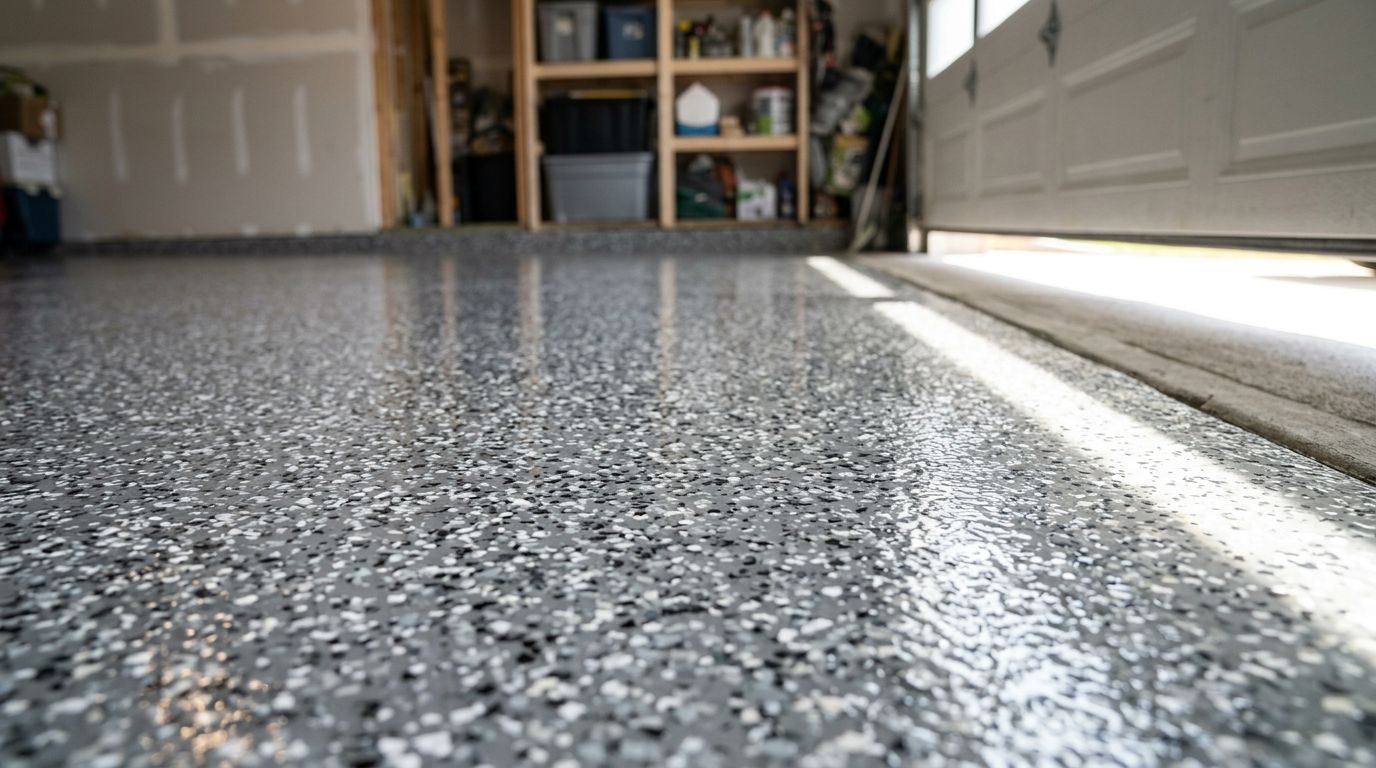
More layers. A decorative flake floor has more steps than a single solid colour: a base coat, a broadcast of flakes, scraping, and a clear topcoat. With a polyaspartic system that still fits in one day. With epoxy layers, each coat needs its own cure time, so the job can stretch across several days.
Your First Week on the New Floor
Once you're parking on it, a few habits protect the coating while it finishes curing:
· Let hot tires cool on longer drives. Tires come off the highway hot, and on a coating that isn't fully cured that heat can cause hot tire pickup, where the rubber softens the coating and peels patches away. A few minutes in the driveway first is cheap insurance.
· Don't turn the steering wheel while parked. Scrubbing a tire in place is hard on any new floor.
· Hold off on rubber mats and harsh cleaners. Plain water and a soft mop are all it needs that first week.
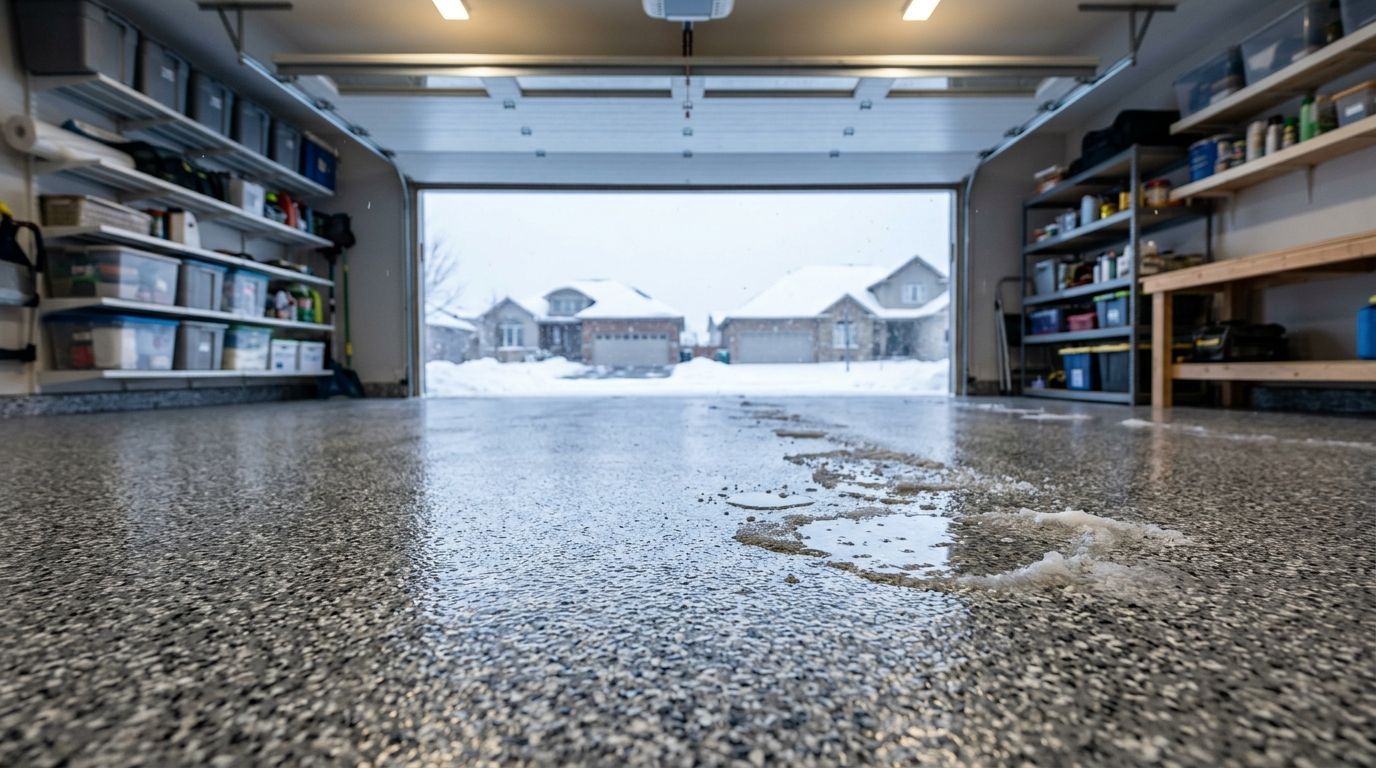
· Squeegee out salt slush. Winter brine won't hurt a properly cured floor, but there's no reason to let it sit on one that's still curing.
· Lift, don't drag. Shelving, toolboxes, and freezers go back in carried, not slid.
Planning Around Install Day
The coating is only part of the timeline. A properly done one-day garage floor coating still starts with surface preparation and grinding the same morning, and any cracks or salt damage get filled before a coating goes down. If your slab needs significant crack repair, that can add time, and you'll know before the job is booked.
For businesses, the math is even more important. In automotive shops and other commercial epoxy floors, every day a bay sits closed is lost revenue, which is why fast-curing systems are often worth it there even when the upfront cost is higher.
So, How Long Will Yours Take?
If getting your car back inside quickly matters most, a polyaspartic system usually means one day without your garage. If you're leaning toward epoxy, plan on most of a week and a warm enough slab. We break down the rest of the trade-offs in our epoxy vs. polyaspartic flooring guide.
Either way, we'll give you a realistic timeline for your slab and the time of year before the job starts. That's how we handle every concrete floor coating job we do in the Waterloo Region, so there are no surprises on day two.
Frequently Asked Questions
Can I walk on my new garage floor the same day?
On a polyaspartic system, usually yes, within a few hours of the topcoat going down, in clean socks or soft-soled shoes. On epoxy, plan on waiting until the next day.
Can I put my things back in the garage right away?
Lighter items like bins can usually go back the evening of a polyaspartic install or the next morning. Heavy items like freezers, toolboxes, and loaded shelving are best left until the floor is drive-on ready, and should be carried in, not dragged.
Does cold weather change when I can drive on it?
Yes. Cold slabs slow every coating down. Polyaspartic still cures in cold conditions, but the drive-on window may stretch past 24 hours. Epoxy may not cure properly at all in a cold garage, which is why timing matters more with epoxy in late fall and winter.
What happens if I park on the floor too early?
Tires can leave permanent marks, dents, or lifted spots in a coating that hasn't hardened enough. It's one of the most common reasons a new floor looks worn within weeks. If you're unsure, wait the extra day.
Want a Timeline for Your Garage?
Tell us about your garage and when you'd like it done, and we'll tell you exactly how long you'll be without it. Call 226-444-0153 or book a free quote.