What Is Polyaspartic Flooring?
A Plain-English Guide for Waterloo Homeowners
If you've been shopping for a garage floor coating around Waterloo, you've probably seen the word polyaspartic on a quote or a competitor's truck and wondered what it actually means. It isn't marketing jargon, and it isn't just a fancier name for epoxy. It's a specific coating chemistry with real strengths and a couple of honest trade-offs. Here's what polyaspartic flooring is, how it behaves once it's on your floor, and how to tell whether it suits your garage.
Polyaspartic, Explained Without the Chemistry Lecture
Polyaspartic is a two-part coating. A resin and a hardener get mixed on site, and the moment they meet, a chemical reaction starts that turns the liquid into a hard, tough film bonded to the concrete. Technically it belongs to the aliphatic polyurea family. "Aliphatic" is the word that matters to a homeowner, because it's the reason the coating stays clear and holds its colour in sunlight instead of slowly turning amber.
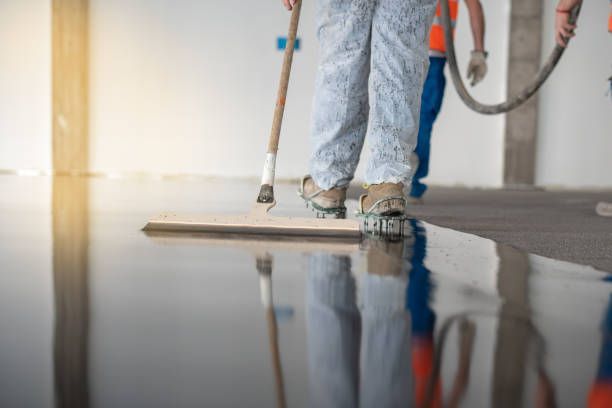
The other thing that sets polyaspartic flooring apart is speed. The reaction runs fast, so a floor goes from wet to walkable in a few hours and is usually ready for a vehicle within about a day. That speed is the whole reason one-day garage floors exist.
Where Polyaspartic Fits Next to Polyurea and Epoxy
These three names get used like they're interchangeable. They aren't, and the polyaspartic vs. polyurea question trips up a lot of people because the two really are related.
- Polyurea is the parent family. Pure polyurea cures in seconds, which is why it's normally sprayed through specialized equipment for jobs like truck bed liners. That speed makes it very hard to roll out evenly across a garage floor.
- Polyaspartic is a modified polyurea. The reaction is slowed down just enough to give an installer working time, minutes instead of seconds, so it can be rolled out by hand and still cure quickly.
- Epoxy is a different chemistry altogether. It cures more slowly, usually needs several days before you can park on it, and can yellow over time where sunlight hits it.
If you're stuck choosing between the two most common garage options, we put the full head-to-head, including how each one handles an Ontario winter, in our epoxy vs. polyaspartic flooring guide.
What Polyaspartic Is Actually Like to Live With
You get your garage back fast. Most people don't want the car on the driveway and the garage contents in the backyard for most of a week. A polyaspartic floor usually means one day of disruption, not four.
It doesn't yellow. A UV-stable garage floor coating matters more than people expect. If your garage door stays open on sunny afternoons, or there's a window along the side wall, that sunlit strip of floor is where an epoxy floor shows its age first.
It can go down in the cold. Because the cure is chemical and fast, many polyaspartic products can be installed below freezing, depending on the product. That makes it one of the few true cold-weather garage floor coatings, which is handy in a region where the coating season would otherwise wrap up in October.
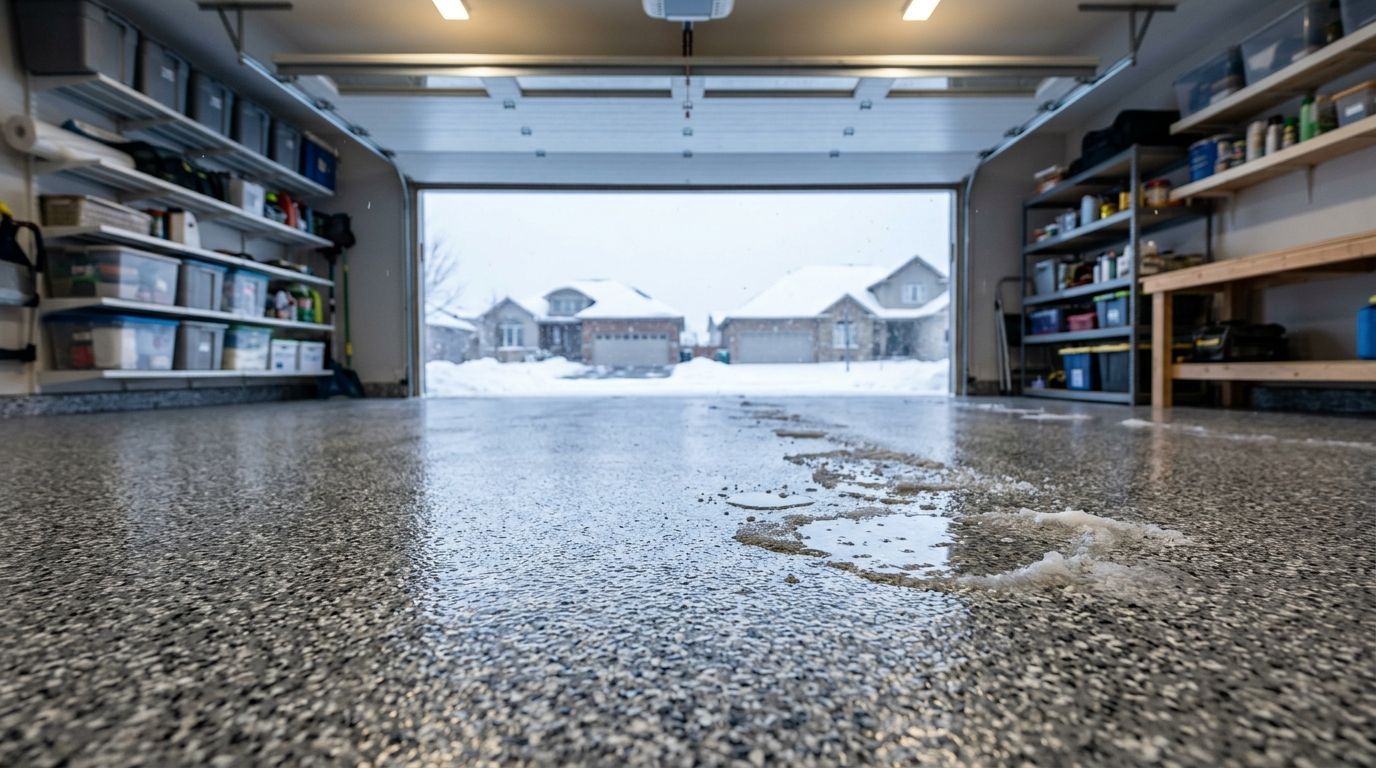
It handles what a garage throws at it. Road salt brine, oil drips, antifreeze, and hot tires coming in off the highway are everyday hazards on a Waterloo garage floor. A properly installed polyaspartic system shrugs off staining from all of them, and it's far less prone to hot tire pickup, where warm tires soften a coating and peel patches of it off the floor.
Is a One-Day Polyaspartic Garage Floor Legit?
It's a fair question, and you'll see it asked on Reddit and RedFlagDeals by people who've been burned by a cheap coating before. The honest answer is that the coating really can cure in a day. What decides whether the floor lasts is everything that happens before the coating goes on.
A one-day polyaspartic garage floor still needs the concrete ground to the right profile so the coating has something to grip, and any cracks, spalling, or salt pitting repaired with a flexible filler first. When a one-day floor fails, it's almost always because one of those steps was rushed or skipped, not because of the polyaspartic itself. That's why our crews start every job with concrete surface preparation and grinding, and why we look at concrete crack repair before we ever talk about colours.
Where Polyaspartic Flooring Gets Used
Garages are where most people first run into it, and a polyaspartic garage floor coating is where most of our residential work starts. But the same polyaspartic floor coating shows up in plenty of other spaces:
- Over decorative flake. Polyaspartic is often the clear topcoat that locks a decorative flake floor in place, so you get the colour and texture of the flakes with polyaspartic's UV and wear resistance on top.
- Basements and workshops, where a quick return to use matters and the floor takes a beating from tools, bikes, and storage bins.
- Commercial spaces, especially automotive shop floor coatings, where every day a service bay sits closed costs money. Larger plants and warehouses often pair it with heavier industrial epoxy floors where build thickness matters more than speed.
The Downsides Nobody Puts on the Brochure
No coating is perfect, and polyaspartic has a few trade-offs worth knowing before you get a quote.
- It costs more upfront than a basic epoxy job. The materials are pricier and the install takes an experienced crew. Most homeowners find the longer lifespan and faster turnaround make up for it, but it's a real difference.
- It's not a friendly DIY product. The same fast cure that makes it convenient leaves very little time to work. Mix too much or roll too slowly and it starts setting up in the bucket or leaves lap marks across the floor.
- A smooth, glossy finish can be slick when wet. Snow melt and slush on a high-gloss floor is a genuine slip risk. Broadcasting flake or adding an anti-slip additive solves it, and it's worth asking about as part of a slip-resistant floor coating upgrade.
Is Polyaspartic the Right Choice for Your Floor?
If you want your garage back quickly, you'd like a floor that won't yellow by the door, and you plan to be in the house long enough to care about the next fifteen years, polyaspartic is hard to beat. If budget is the main driver and a longer cure doesn't bother you, a traditional epoxy system can still do the job well. You can see what that looks like on our garage epoxy floors page.
Either way, the right answer depends on the slab you're starting with. That's the first thing we check on every concrete floor coating job across the Waterloo Region, before anyone talks about products.
Frequently Asked Questions
Is polyaspartic the same as polyurea?
Not quite. Polyaspartic is part of the polyurea family, but it's been modified to cure more slowly than pure polyurea. That extra working time is what lets it be rolled out by hand on a garage floor instead of sprayed.
Can polyaspartic go over an existing epoxy floor?
Sometimes. If the old epoxy is still firmly bonded, it can be ground down and recoated. If it's peeling, flaking, or lifting at the edges, it has to come off first, or the new coating will fail right along with it.
Does polyaspartic flooring come in colours?
Yes. It can be tinted as a solid colour or used as a clear topcoat over a decorative flake blend. A lot of homeowners go with flake for the texture and because it hides dust and tire marks between cleanings.
Can I install a polyaspartic floor myself?
DIY kits exist, but it's one of the harder coatings to apply well. The short working time leaves little room for error, and the prep it needs, diamond grinding the slab to the right profile, usually takes equipment most homeowners don't own.
Want to Know If Polyaspartic Suits Your Garage?
We'll come out, look at your slab, and give you a straight answer on whether polyaspartic, epoxy, or a flake system makes the most sense for how you use the space. Call us at 226-444-0153 or
request a free quote, and we'll walk you through it.